The problem
A new law, and staff who change every month
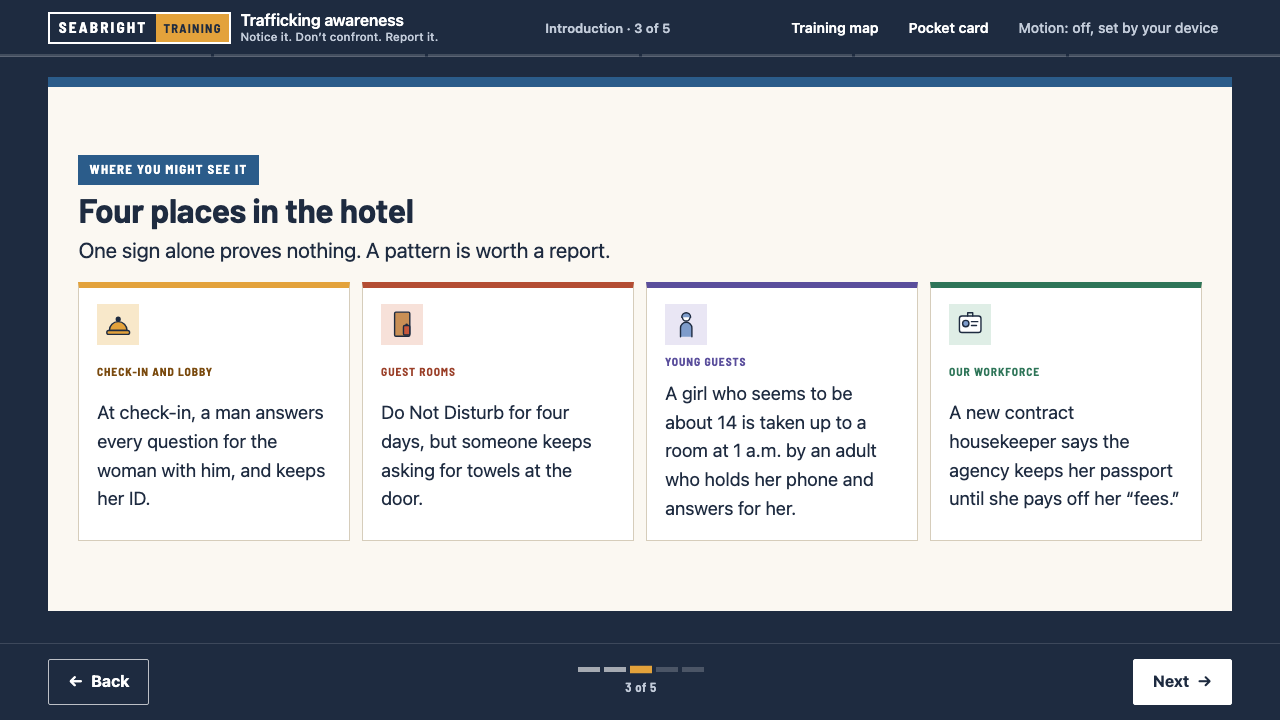
Traffickers use hotel rooms because they are private and paid by the night. Workers can be exploited inside hotels too, often through recruiters and staffing agencies. The people most likely to notice are the hotel’s own staff: the front desk, housekeeping, the valet.
In July 2026 Hawaii made training them a legal duty, starting in 2027. Under Act 191 (HB 1960), every hotel employer, and every staffing contractor that places workers in hotels, must:
- adopt a prevention and reporting policy by September 1, 2027;
- train each worker who has contact with guests or access to guest rooms within 180 days of hire, and every two years after, starting by December 1, 2027;
- post signs in English and any language spoken by at least 10 percent of staff by January 1, 2028;
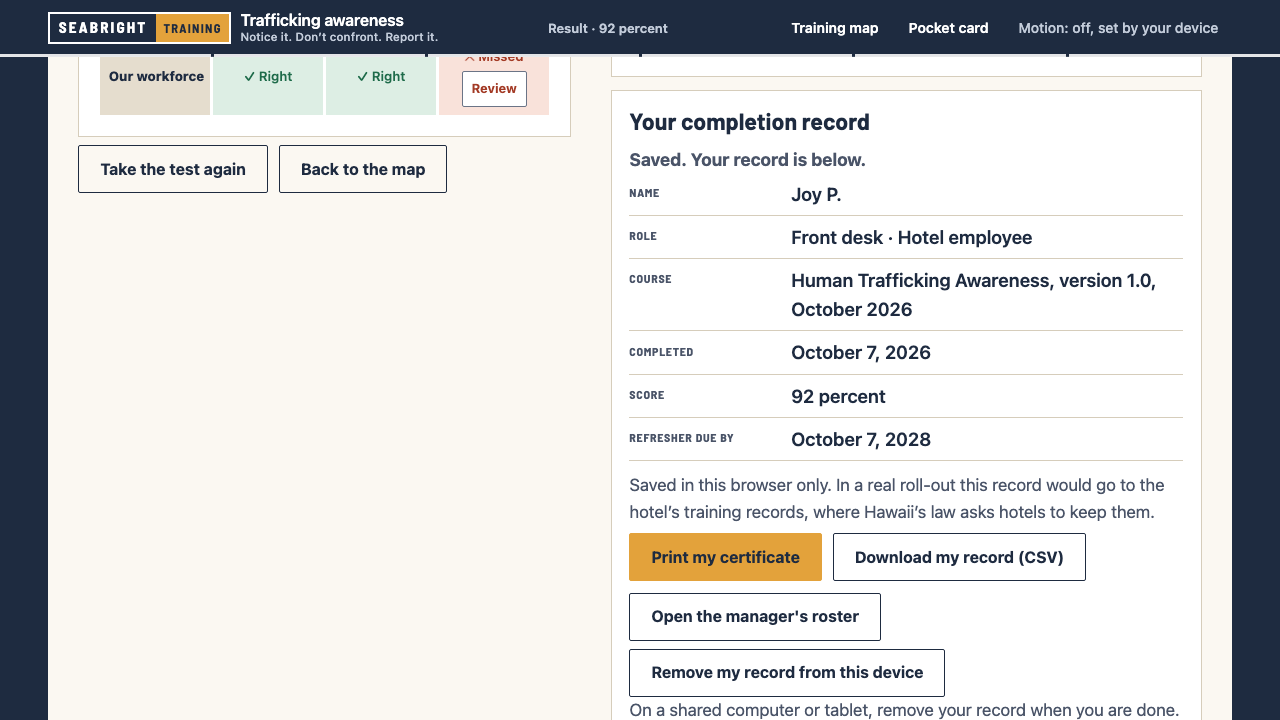
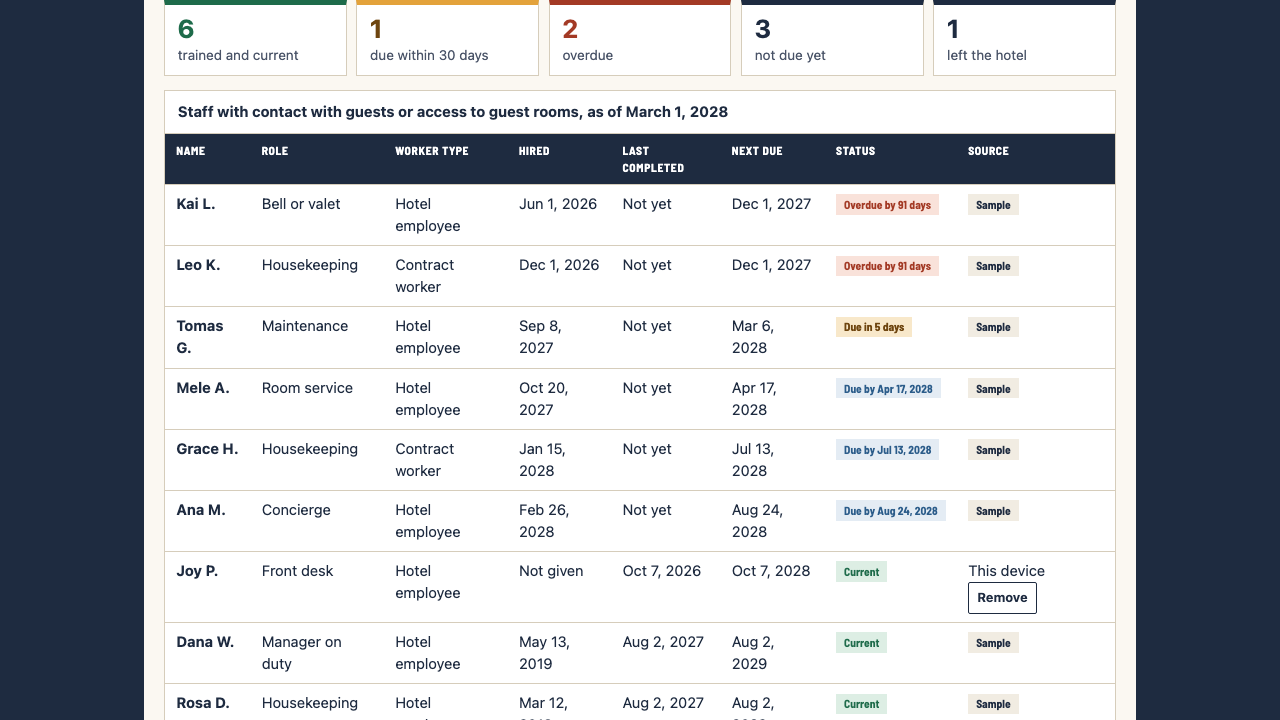
- keep records of who was trained.
Each violation can cost up to $100 a day. The training must be the Attorney General’s program, due by July 1, 2027, or one the Attorney General approves. Only a hotel or a staffing contractor can submit one.
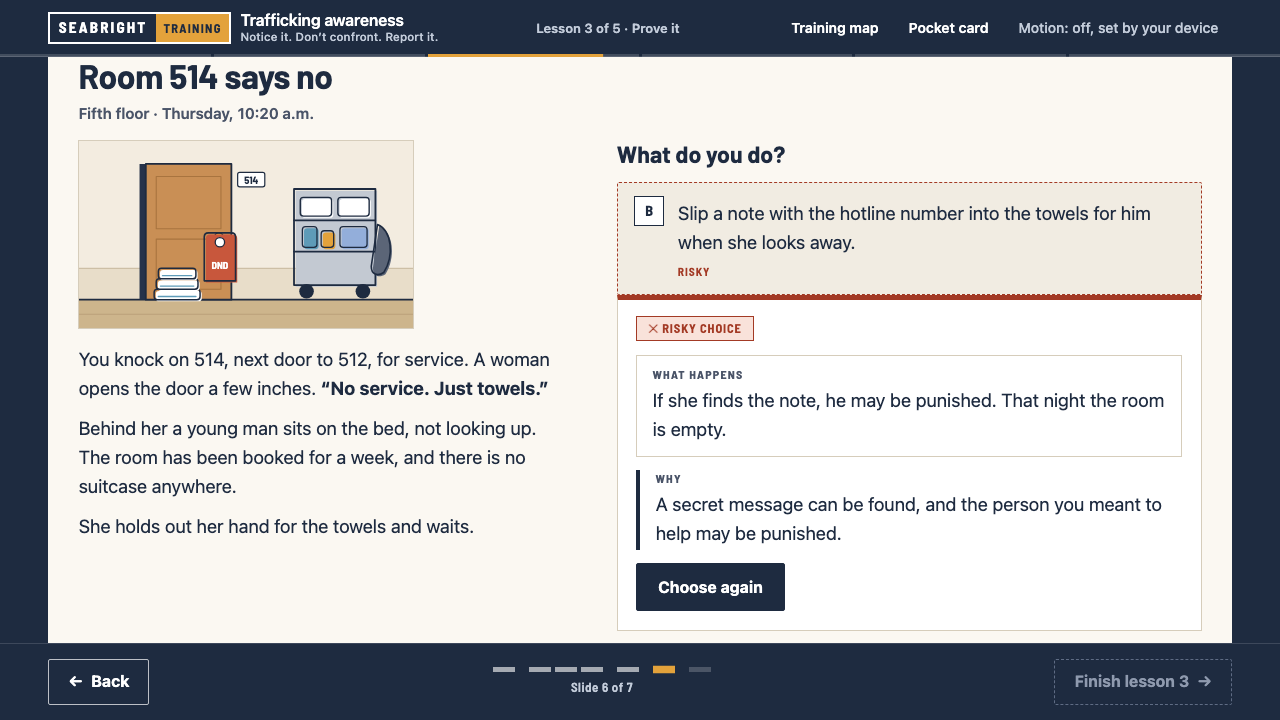
For a small hotel with high turnover, the hard part is not the first training day. Every new hire starts a new 180-day clock. The other hard part is behavior: a worker who wants to help may question a guest in front of the person in control, slip a note into the towels, or knock on a door. Each of those can put the person at risk.
Where training can help, and where it can’t
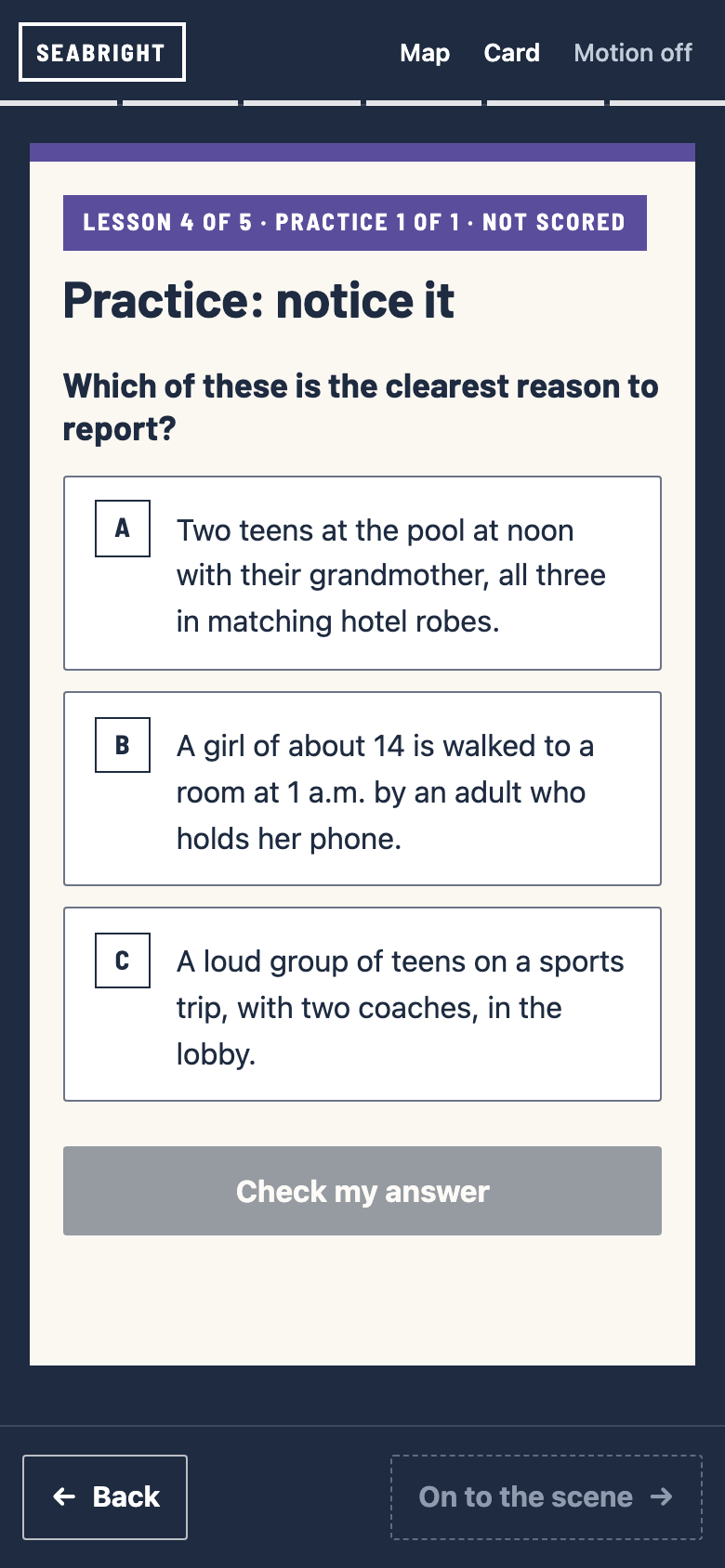
Staff don’t know the signs, or judge by looks
CauseKnowledge. Assumption: common lists mix behavior with appearance, and staff fill the gaps with guesses about accent, age or nationality.
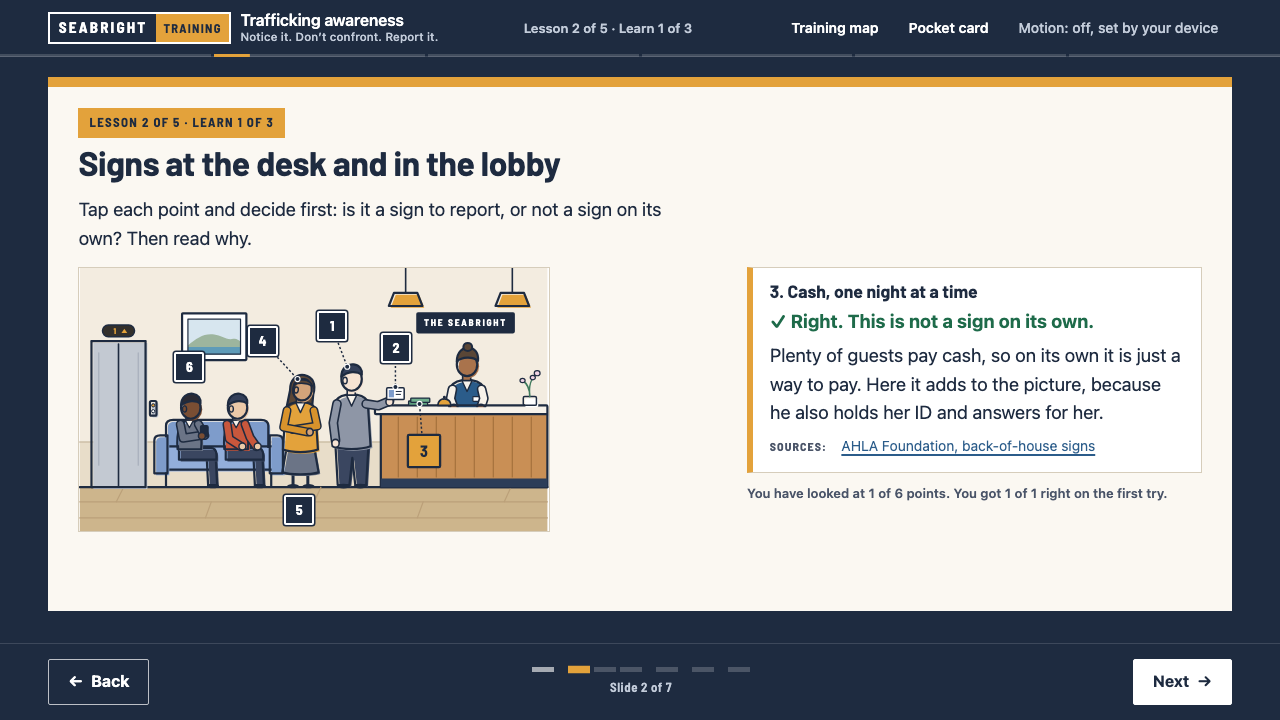
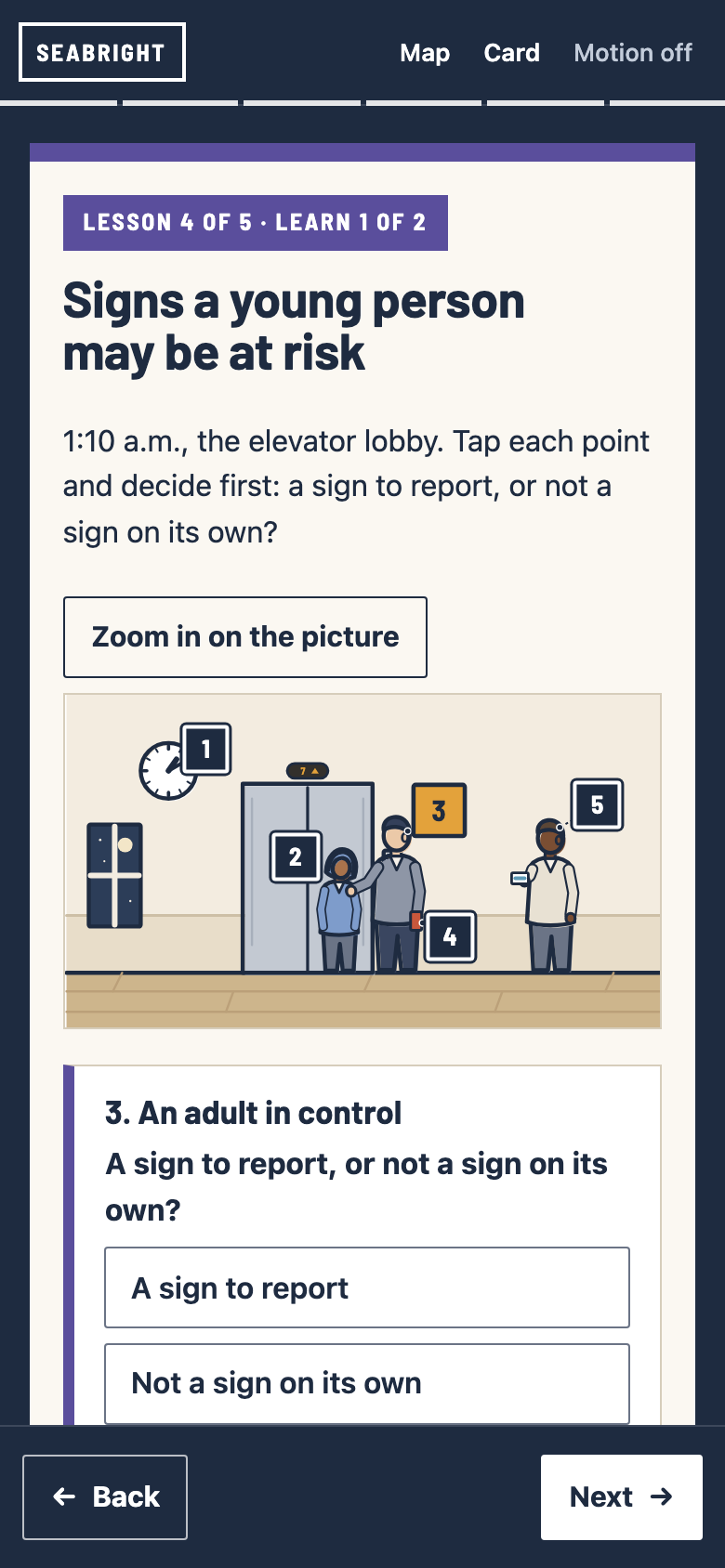
What fixes itTraining: a picture of each place, signs sorted by who they’re about, and cards that are “not a sign on its own.”
They help in a way that does harm
CauseSkill under pressure. Per the federal guidance, the kind-hearted move, asking “are you okay?” in front of him, is the dangerous one.
What fixes itTraining: scenes where that choice plays out and fails, then the learner chooses again.
They wait to be sure, or don’t want to cause trouble
CauseMotivation. Fear of being wrong about a guest.
What fixes itTraining shows that certainty isn’t needed and that the law protects good-faith reports. The hotel has to back it up: no blame for a good-faith report.
Nobody to tell, or new hires slip past day 180
CauseEnvironment. No named person on each shift, and no system that tracks hire dates.
What fixes itThe hotel, not the course: a policy, a manager or security person on every shift, and records. The kit supports this with a roster and a policy template.